By Uzairu Dauda Bunga:
Child mortality remains a critical challenge in Nigerian match to greatness. This, us identified as a significant set back to the developmental objective of the country.
As one of the ways out of this wound, UNICEF calls on media practitioners to intensify efforts in raising awareness on the urgency of ending child mortality, aiming to strengthen health systems for the benefit of Nigerian children.
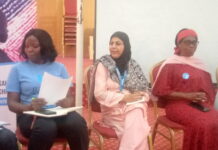
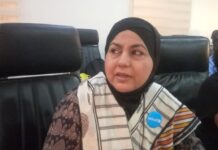
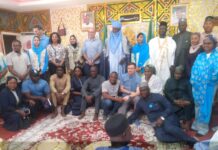
The called was made by the UNICEF’s Chief of Bauchi Field Office, Dr. Nuzhat Rafique in a message during a media dialogue on ending child mortality held in Plateau State, with participants from the focus MoU states if Bauchi, Gombe, and Taraba.
Represented by Dr. David Audu, health Specialist, emphasizes on UNICEF’s commitment to protecting children’s rights, ensuring access to quality healthcare, education, and overall welfare.
Dr. Rafique highlighted the importance of children’s rights to be born in health facilities, receive complete immunizations, and have access to good nutrition and clean water as fundamental measures for survival.
“Every child has the right to healthcare starting from womb to birth,” she stated.
In a presentation on child mortality, Dr. Adah Ruth, a Consultant Pediatrician at Jos University Teaching Hospital, reveals that globally, 5 million children die within their first week of life every year due to preventable causes.
Pointing out that, the high rate of child mortality in Africa, particularly in Nigeria were attributable to factors such as poor socio-economic conditions, inadequate health infrastructure, malnutrition, and unhygienic environments.

She said looking at the National Demographic Health Survey findings, in Nigeria, an estimated 41 out of 1,000 newborns, 63 out of 1,000 infants, and 110 out of 1,000 children under five die each year, with Northeast Nigeria recording the second-highest mortality rate in the country therefore becoming a serious cause of concern.
The survey also indicated, in Bauchi State, under-five mortality has worsened in recent times with deaths rising from 41 per 1,000 live births in 2019 to 48 per 1,000 in 2023.
Dr. Ruth called for collaborative efforts from parents, government, development partners, and community leaders to address these alarming statistics to save the lives of future generation.
In his presentation, the Health Officer from UNICEF’s Bauchi Field Office, Dr. Oluseyi Olusunde presented trends on child mortality in Bauchi, Gombe, and Taraba states, emphasizing the need to gear up collective effort to ensure children’s health and well-being are given proper attention.
He noted that 70% of child mortality cases in Nigeria are preventable through straightforward measures such as breastfeeding, handwashing, immunization, proper nutrition, and access to clean water, but due to low awareness such a vintage opportunity has not been adopted promptly.
Dr. Olusunde cited data showing that Nigeria accounts for 1 million of the 5 million global child deaths each year, for Bauchi, Gombe, and Taraba alone report mortality rates of 38, 45, and 37 children per 1,000 lives birth respectively, noting that the Sustainable Development Goals (SDGs) targets to reduce this number to 17 per 1,000 by 2030.
A recent survey (NDHS 2023/2024) highlights that about 7 out 10 (around 70%) of births in Bauchi and Taraba occur at home, and about 5 out of 10 deliveries (55.1%) in Gombe, occurs at home.
Additionally, nearly 3 out 10 (30%) of newborns in Bauchi and Taraba and 5 out of 10 (50%) in Gombe do not receive postnatal care, and three out of ten children in these states lack essential immunizations.
Also in another presentation, the UNICEF’s Health Specialist in Bauchi Field Office, Dr. David Audu defined child mortality as the death of children under five and stresses that Nigeria’s neonatal, infant, and under-five mortality rates remain unacceptably high.
He identified major causes of child mortality as complications from premature birth, pneumonia, meningitis, diarrhea, and malaria, with half of these deaths occurring in newborns.
Other contributing factors included poverty, inadequate nutrition, unsafe drinking water, poor maternal health, limited access to quality healthcare, and cultural practices that prevent timely medical intervention.

Dr. Audu urged that “it is everyone’s responsibility to ensure that every child has the opportunity to survive, thrive, and grow.”
The call from UNICEF and health professionals underscores an urgent need for a concerted, multi-sectoral approach to reduce child mortality in Nigeria, protect children’s lives, and foster national development.