By Uzairu Dauda:
Stakeholders in Bauchi State have been urged to strengthen collaboration to ensure the successful implementation of the One Health Initiative aimed at improving public health through enhanced emergency preparedness, disease surveillance and coordinated response to outbreaks.
The call was made during a meeting on the establishment and strengthening of the Risk Communication and Community Engagement (RCCE) and Infodemic Management Technical Working Group in Bauchi.
Presenting an overview of the FHI 360 EPIC Project’s support for Global Health Security, the Associate Director of RCCE for the EPIC Project, Dr. Auwalu Kawu, said the project applies research and evidence-based interventions to promote the One Health approach, which recognises the interconnectedness of human, animal and environmental health.
According to him, Bauchi State is among the beneficiaries of the eight-year project funded by the United States Department of State, explained that the project provides technical assistance, capacity building and multi-sectoral collaboration to strengthen preparedness and response to public health emergencies, including the management of infodemics.
Dr. Kawu said the project supports oxygen systems and Maternal, Newborn and Child Health (MNCH) programmes across the state’s 17 Local Government Areas, while Global Health Security interventions cover all parts of the state.
The Epic Project Associate Director noted that the project supports key public health pillars, including responses to cholera, Lassa fever, diphtheria, yellow fever, meningitis, mpox, measles, Ebola, antimicrobial resistance (AMR), RCCE preparedness and other priority health programmes.
He stressed that effective risk communication cannot succeed without active community engagement, adding that all stakeholders must work together to meet the state’s public health needs.
He said the goal is to strengthen evidence-based coordination, improve data collection, enhance early detection and ensure timely control of disease outbreaks for better health outcomes in Bauchi State.
Dr. Kawu identified the institutionalisation of effective Emergency Management Coordination and Governance as one of the project’s key objectives.
He urged members of the Technical Working Group to strengthen coordination, harmonise public health messaging and hold regular meetings to ensure sustainability.
Dr Kawu also called for stronger collaboration among government agencies, development partners and communities to promote evidence-based decision-making, improve emergency preparedness and build public trust in health interventions.
Speaking on the objectives of the Technical Working Group, the Head of the National RCCE and Infodemic Management Technical Working Group, Hajiya Hannatu Bello, said the committee was established to strengthen coordinated responses to disease outbreaks across the state.
She explained that the structure would be replicated at the Local Government Area level to ensure grassroots participation and effective community engagement.
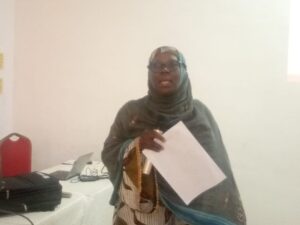
According to her, the meeting was designed to orient members on the mechanisms and priority functions of RCCE in public health emergency preparedness and response, develop and validate an operational framework, strengthen RCCE coordination at the sub-national level and support the establishment of functional RCCE and Infodemic Management Working Groups in EPIC-supported states.
Earlier, the Bauchi State Health Promotion Officer, Alhaji Muhammad Ribadu Jibrin, presented an overview of the state’s RCCE coordination landscape, noting that Bauchi has an active advocacy and community engagement platform comprising government agencies, development partners, traditional and religious leaders, media organisations and programme officers.
He said the group’s key responsibilities include health education, awareness creation, community mobilisation and advocacy on antenatal care, immunisation, hygiene and maternal, newborn and child health to improve responses to disease outbreaks.
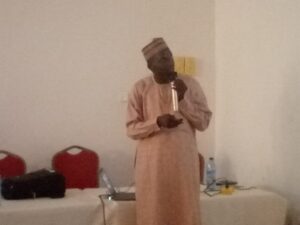
According to him, the group also mobilises communities for health campaigns, outreach services, public health interventions and school sensitisation programmes.
Ribadu identified malaria, maternal mortality, child mortality, malnutrition, pneumonia, rabies, Lassa fever, measles, diphtheria and other vaccine-preventable diseases as major health challenges requiring sustained intervention in Bauchi State.
He, however, noted that cultural and traditional beliefs, misinformation, rumours, religious misconceptions, resistance to behaviour change, poor health-seeking behaviour and delayed reporting of disease outbreaks continue to hinder effective health education and community sensitisation.
Also speaking, Senior Communications Officer Mr. Michael Okali, while presenting the structure of the National RCCE and Infodemic Management Technical Working Group, the Senior Communication Officer of Mr Michael Okali said the Nigeria Centre for Disease Control and Prevention (NCDC) is responsible for developing and implementing risk communication and community engagement strategies before, during and after public health emergencies.
He explained that the agency also conducts research and establishes mechanisms to improve public health communication and emergency response.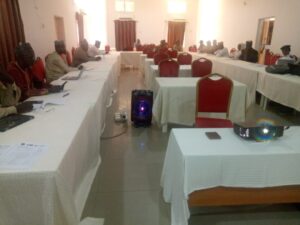
Mr. Okali observed that Nigeria is currently battling several disease outbreaks, including Lassa fever, measles, diphtheria and cholera.
He therefore urged members of the Bauchi State Technical Working Group to leverage their expertise and experience to advance the objectives of the One Health Initiative and strengthen disease preparedness across the state.