By Uzairu Dauda:
Stakeholders have been urged to support women’s quest for justice, inclusion in decision-making, and greater participation in leadership positions, while recognizing their immense contributions to national development.
The call was made by the Executive Director of the Alheri YS Foundation during a Stakeholders’ Policy Development Roundtable Meeting held at Pali Suites, Bauchi.
Represented by the Foundation’s Finance Officer, Mrs. Rachael Ola, the Executive Director said the meeting, themed “Advancing Inclusive Governance Through Enhanced Women’s Participation in Leadership and Decision-Making,” was organized to develop a robust policy framework for implementing a 35 percent reservation for women in government committees, including executive and legislative councils in Bauchi State.
She expressed concern over the marginalization of women in the recently concluded primary elections across political parties in the state, noting that very few women were given opportunities to contest elective positions.
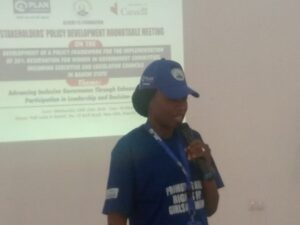
Speaking at the event, the Project Manager of the ASPIRE Project under Plan International Nigeria in Bauchi State, Miss. Alheri Ayuba, said the project aims to promote safe, healthy, and inclusive communities where adolescent girls and women can access quality Sexual and Reproductive Health and Rights (SRHR) services and actively participate in governance.
According to her, the five-year project, funded by Global Affairs Canada (GAC), seeks to ensure that adolescent girls have access to quality healthcare services, combat child marriage and gender inequality, and remove barriers that prevent them from achieving their full potential in Bauchi and Sokoto states.
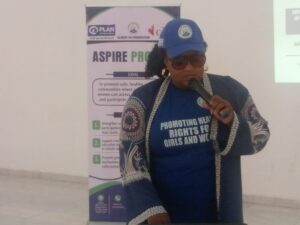
Mrs. Ayuba explained that the project engages community and religious leaders to support adolescent girls in protecting their rights and accessing essential health services.
She added that the initiative would establish gender-responsive units in health facilities, strengthen child protection mechanisms in schools, and provide psychosocial support for vulnerable girls and women.
Also speaking, the representative of the International Federation of Women Lawyers (FIDA), Bauchi State chapter Barrister Florence Yohana Tabsah, lamented the persistent exclusion of women from decision-making, policy formulation, and governance processes in Nigeria.
She noted that authorities have yet to fully implement the National Gender Policy, which advocates 35 percent affirmative action for women in public appointments and political offices.
According to her, inadequate political will, discrimination within political parties, and entrenched cultural norms remain major obstacles to women’s political participation and advancement.
Representing the Head of Civil Service of Bauchi State, Alhaji Ibrahim Haruna Umar stated that the state government has continued to appoint women to key positions in both political and civil service structures as part of efforts to promote inclusive governance.
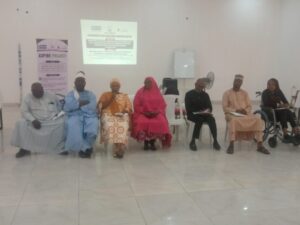
During the plenary session, participants identified several cultural and religious barriers limiting women’s participation in leadership, these include early marriage, misconceptions about religious teachings, and societal perceptions that women should primarily focus on domestic responsibilities and childbearing, which undermine their capacity to contribute effectively to governance and development.
The stakeholders emphasized the need for collective action to dismantle these barriers and create more opportunities for women to participate meaningfully in leadership and decision-making at all levels.