By Uzairu Dauda:
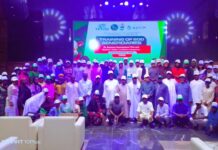
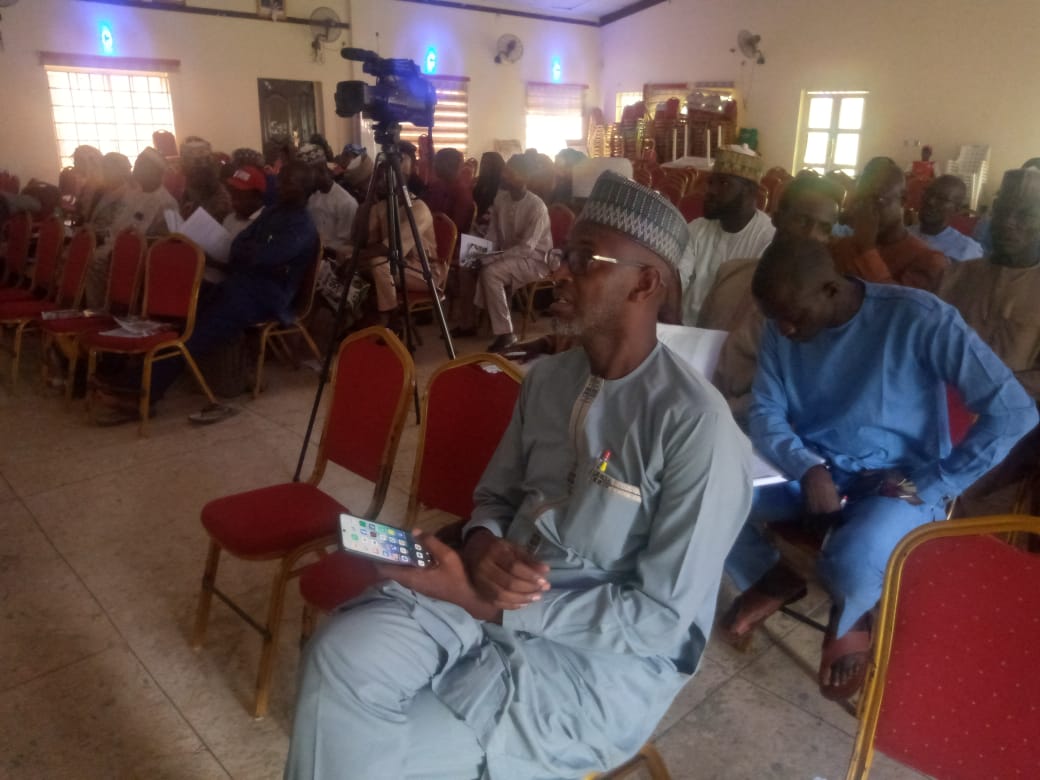
Bauchi State Coordinating Office of the Livestock Productivity and Resilience Support (L-PRES) Project has trained 50 livestock farmers on modern animal fattening techniques aimed at increasing livestock productivity, improving incomes, and promoting sustainable livelihoods.
Declaring the training workshop open in Bauchi, the State Coordinator of L-PRES, Dr. Musa Adamu One, said the capacity-building programme was designed to equip farmers with modern livestock production practices that would enhance the state’s economy.
Represented by the Animal Husbandry Officer of the project, Alhaji Abubakar Isah Shehu, the coordinator explained that the World Bank-supported L-PRES Project is committed to empowering livestock farmers, improving productivity, and enhancing rural prosperity through sustainable value chain development.
He urged participants drawn from various local government areas of the state to apply the knowledge gained during the training and transfer it to other members of their associations to ensure wider adoption of improved livestock management practices.
Dr. Musa reaffirmed the project’s commitment to continuously build the capacity of farmers and livestock rearers in Bauchi State, with the goal of producing high-quality beef that meets international market standards.
According to him, modern livestock fattening offers numerous economic benefits, including stable incomes, reduced market volatility, improved business planning, employment generation, access to premium markets, and increased profitability.
Delivering a presentation on modern livestock fattening techniques, a lecturer from the Department of Agricultural Engineering, Abubakar Tafawa Balewa University (ATBU), Bauchi, Dr. Muhammad Garba, said modern livestock production focuses on using available resources more efficiently to maximise returns by targeting profitable markets, particularly during festive seasons when demand for beef is high.
He explained that the beef value chain encompasses breeding and cow-calf production, calf rearing and backgrounding, feedlot fattening, livestock transportation, slaughtering and meat inspection, meat processing, distribution, retail marketing, and final consumption, all of which contribute significantly to economic growth.
Dr. Garba advised farmers to carefully select suitable cattle for fattening by considering breed, age through dentition, body condition score, health status, temperament, and estimated live weight.
He noted that proper selection of animals results in higher daily weight gain, improved feed conversion efficiency, reduced mortality and treatment costs, shorter fattening periods, better meat quality, and increased profitability.

The expert further stressed that ideal cattle for fattening should possess desirable physical characteristics such as a long body, deep chest, broad back, wide hindquarters, a straight topline, strong legs and feet, moderate body condition, and a healthy appetite.
He said, the training forms part of L-PRES’ ongoing efforts to strengthen livestock production systems, improve the beef value chain, and position Bauchi State as a leading hub for quality livestock production in Nigeria.