By Uzairu Dauda:
As Nigeria joins other African nations in commemorating the Day of the African Child, stakeholders in child health, research, and public policy have called for the sustainability and institutionalization of the Safety and Antimicrobial Resistance of Mass Administration of Azithromycin Among Children (SARMAAN) Project as a national child survival priority.
Observed annually on June 16, the Day of the African Child highlights Africa’s collective responsibility to safeguard the rights, health, and future of its children.
Speaking on the significance of the project, the Project Lead of the SARMAAN Advocacy Project Team, Mr. Ikechukwu Ofuani, said the initiative has demonstrated how evidence-based interventions can significantly reduce preventable illnesses and deaths among children under the age of five.

According to him, the project has already reached more than 16 million children across 11 participating states in Northern Nigeria, making it one of the country’s most impactful child survival interventions.
Ofuani noted that SARMAAN has generated valuable evidence on the safe administration of Azithromycin while supporting efforts to tackle preventable childhood illnesses and mortality.
He emphasized that institutionalizing the project would help preserve the gains already achieved, create opportunities for expansion, and integrate its successful approach into Nigeria’s healthcare system for the long-term benefit of children.
Also speaking, Principal at SCIDaR–Solina Centre for International Development and Research, Mr. Demilade Osoteku, described SARMAAN as a practical, scalable, and high-impact intervention capable of improving child survival outcomes, particularly in underserved and hard-to-reach communities.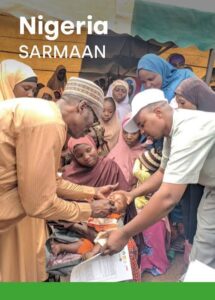
He explained that beyond the administration of medicine, the project has strengthened critical health systems through effective microplanning, supply chain coordination, community engagement, implementation monitoring, data-driven decision-making, and accountability mechanisms at both national and sub-national levels.
Osoteku said that at a time when Nigeria continues to grapple with preventable child deaths caused by malaria and other childhood illnesses, SARMAAN provides a tested, evidence-based platform for closing equity gaps and ensuring that lifesaving interventions reach the most vulnerable children.
At the state level, the Director of Public Health in Jigawa State, Dr. Abubakar Sa’id Kanya, described SARMAAN as a proven child survival intervention that has demonstrated both effectiveness and strong community ownership.
He disclosed that Jigawa State has successfully completed three rounds of Mass Drug Administration (MDA) under the programme, consistently achieving the target coverage rate of 90 percent.
According to him, community acceptance has remained high, with caregivers across participating communities expressing satisfaction with the intervention and reporting positive outcomes.
Similarly, the Executive Secretary of the Gombe State Primary Health Care Development Agency, Dr. Abdulrahman Shuaibu, said the state’s experience with SARMAAN underscores the need for its long-term institutional support and integration into Nigeria’s child survival agenda.
He noted that one of the programme’s most remarkable achievements has been the widespread acceptance it has enjoyed among communities, with no reported resistance throughout its implementation.
Shuaibu added that this level of acceptance is particularly noteworthy, as public health interventions often face varying degrees of skepticism or resistance at the community level.
As discussions on the future of the programme continue, experts have advocated stronger policy integration, increased domestic financing, inclusion of SARMAAN in state and national health plans, and sustained stakeholder engagement to ensure its long-term impact.
They stressed that improving child survival outcomes requires collective action and commitment from governments at all levels, development partners, healthcare providers, community leaders, caregivers, and the private sector.
The stakeholders maintained that institutionalizing SARMAAN would not only consolidate existing gains but also strengthen Nigeria’s efforts to reduce preventable child deaths and secure a healthier future for millions of children.